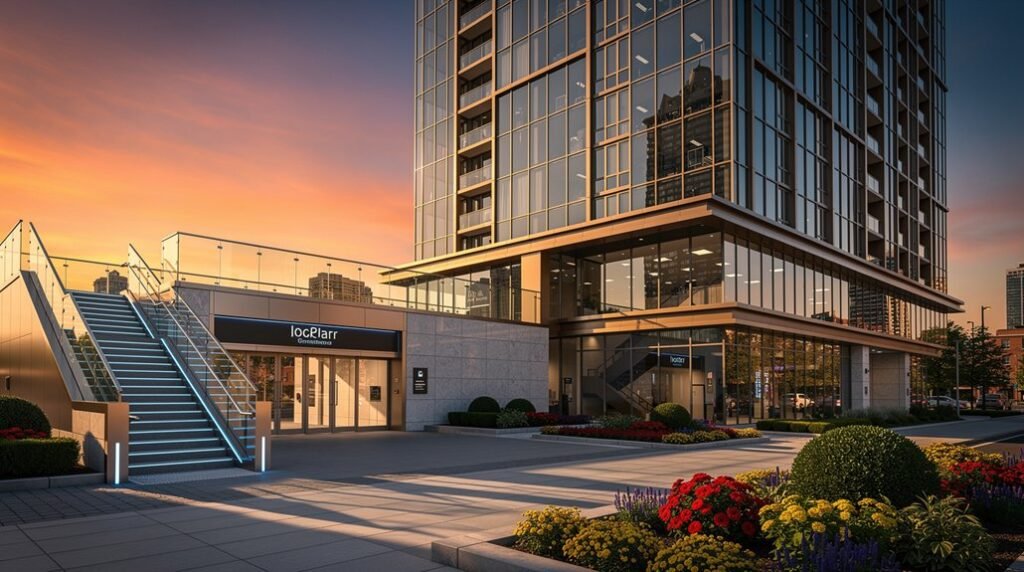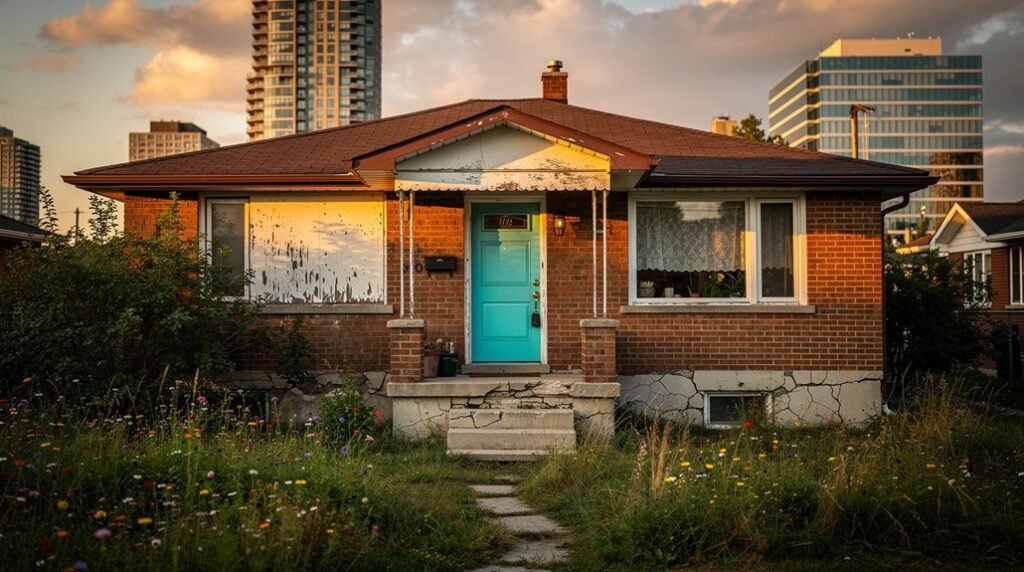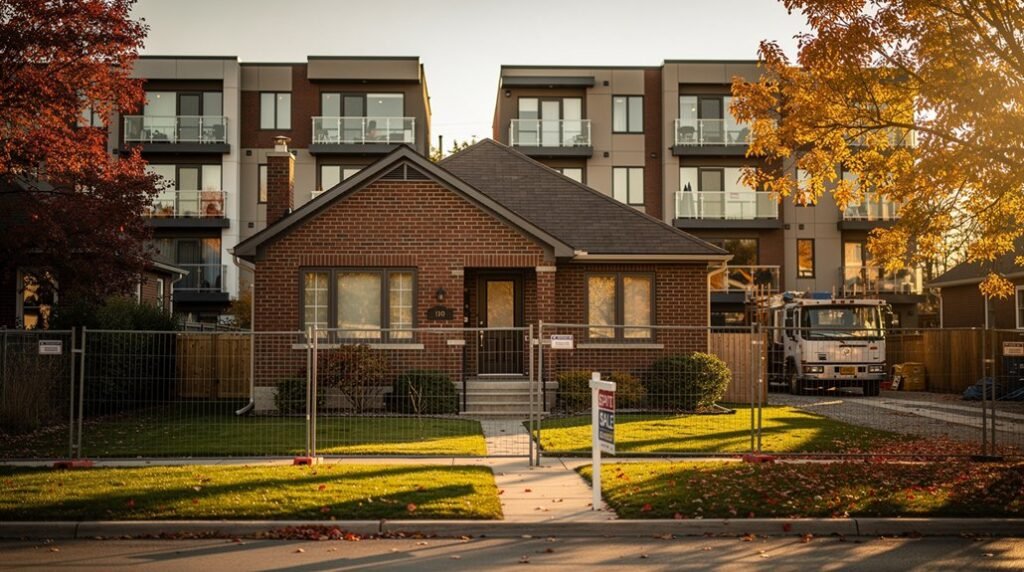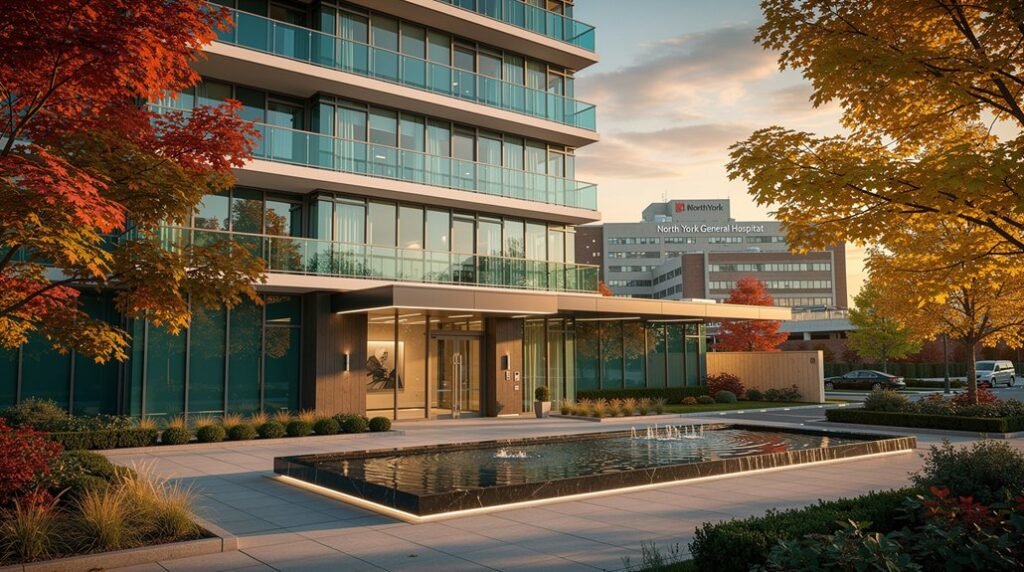
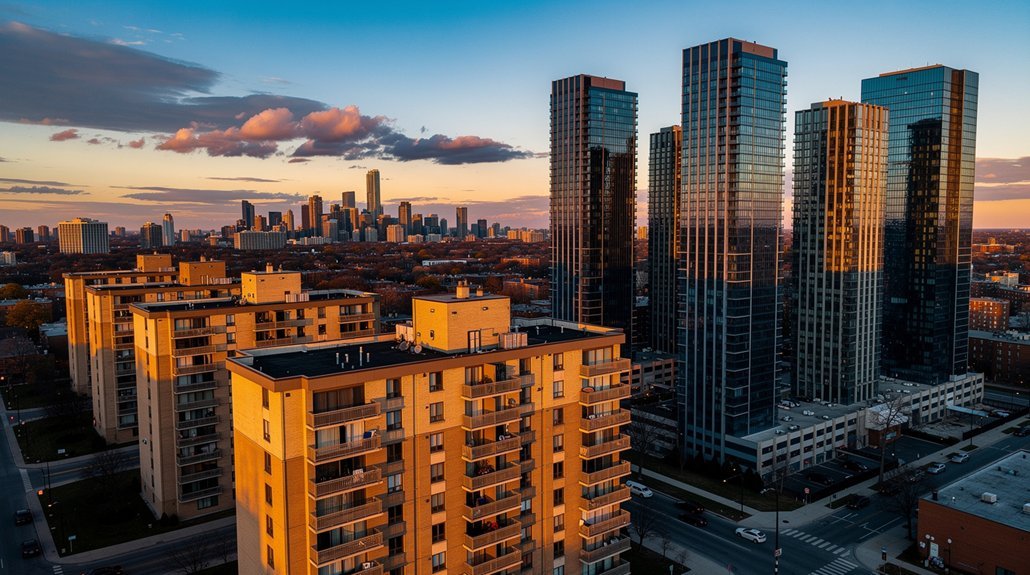
You’ll get 1,070 square feet in a 1990s North York condo versus 647 square feet in a new build—both at similar price points. Older units cost $412-696 per square foot compared to $1,037+ for compact new construction. The 90s buildings deliver proper bedroom dimensions (10×12 ft versus 7×9 ft), concrete soundproofing, and lower maintenance fees at 60-80 cents per square foot. North York’s 35-50 year old condos command $708-756 per square foot, proving lasting value retention. The specifics below break down exactly why square footage hunters choose 1990s inventory.
Key Takeaways
- 1990s North York condos average 1,070 sq ft versus today’s 647 sq ft median, providing 40% more living space.
- Older units cost $412-696 per sq ft compared to $1,037-$2,000 per sq ft for new builds with smaller footprints.
- Proper rectangular layouts feature 10×12 ft bedrooms versus cramped 7×9 ft rooms with awkward angles in modern designs.
- Monthly fees run 60-80 cents per sq ft in 1990s buildings versus 90 cents-$1.20 in newer towers.
- Concrete construction provides superior soundproofing and durability compared to glass towers with 15-25 year projected lifespans.
30-50% More Space Per Dollar: Why 90s North York Condos Win
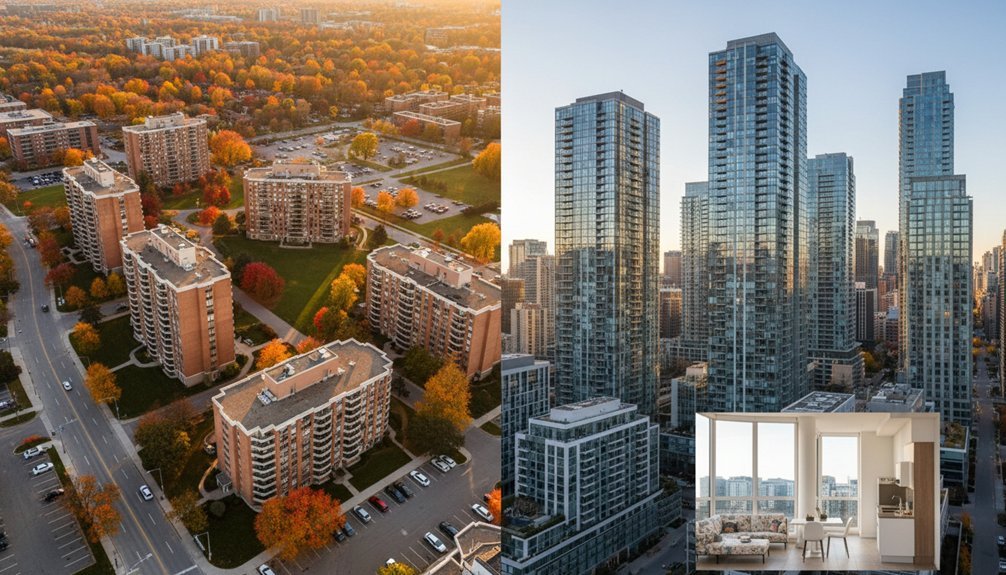
Why do 1990s condos deliver substantially more living space for your money? The numbers reveal a stark mathematical advantage.
The Size Differential:
Toronto condos built 1981-1990 averaged 1,070 square feet. Today’s median sits at 647 square feet—a 40% reduction. You’re getting nearly half the space in modern units.
Price Per Square Foot Reality:
New condos exceed $1,000 per square foot after construction costs. One-bedroom units hit $1,019 per square foot in late 2021. Two-bedrooms reached $843 per square foot.
The Dollar Breakdown:
A $581,000 one-bedroom today yields 570 square feet. That same budget in a 90s building? You’d secure substantially more footage at lower per-square-foot rates.
Ontario’s average condo shrank from 1,100 square feet mid-1990s to 700 square feet currently. The 90s units offer 35% more space—before factoring in lower acquisition costs per square foot. Condos now represent 41% of new builds, surpassing single-detached homes as the dominant housing type in the market.
Land scarcity drove this compression, not improved value. Developers maximize profits by increasing price per square foot while keeping total unit prices accessible to buyers.
90s Condos vs. New Builds: 1,000 Sq Ft vs. 600 Sq Ft Compared
When you’re comparing a 1,000 sq ft 1990s condo to a 600 sq ft new build, you’re examining fundamentally different product categories at drastically different price points. The older unit delivers 66% more living space, which translates to actual rooms instead of combined “flex spaces” that dominate modern floor plans. This size gap directly impacts your cost per square foot ($412-696 for older vs. $1,037 for new), how you’ll actually use the space daily, and what future buyers will pay when you sell. Buildings like 10 Eddystone Avenue demonstrate this advantage with layouts reaching 1,800 square feet spread across 3 to 4 bedrooms. While newer condos like Avenue & Park command $1,257 per square foot, the premium doesn’t translate to proportional living space—you’re paying luxury pricing for compact footprints.
Square Footage Per Dollar
Buyers who zero in on space efficiency discover a stark contrast between older and newer North York condos.
Resale Units Deliver Double the Space
Older condos yield approximately 1,000 sq ft at $400–$700/sq ft. New builds provide roughly 600 sq ft at $1,100+/sq ft. You’re getting 2–3x more square footage per dollar in resale properties.
Exact Dollar Comparisons
At $600,000 budget:
- Older condo: 857–1,500 sq ft (depending on $400–$700/sq ft)
- New pre-construction: 441–545 sq ft (at $1,100–$1,359/sq ft)
Henry Farm properties under $1,000/sq ft maximize your purchasing power. North York’s average resale sits at $571,498 for larger footprints.
Price-Per-Foot Reality
New Toronto builds reach $1,751–$1,989/sq ft for compact units. Pre-construction averages $1,359/sq ft city-wide, limiting typical purchases to under 700 sq ft. Older, value buildings in the downtown core can offer units at $800-$900 per square foot, compared to the $2,000 per square foot price tag for new construction. The 47.6% increase in property values in North York demonstrates that older buildings have delivered strong appreciation while maintaining superior space-per-dollar metrics.
Room Layout and Functionality
How dramatically does an extra 400 square feet reshape your daily living experience? Consider the functional differences:
Bedroom Configurations
1990s two-bedroom units feature proper secondary bedrooms measuring 10×12 feet. Modern equivalents resemble cruise ship cabins at 7×9 feet. You’ll find dens in older buildings span 8×9 feet with full doors—actual rooms, not architectural compromises.
Kitchen and Living Spaces
Pre-2000 kitchens and living rooms averaged 30-40% more linear space. You’re working with substantially larger countertops and entertaining areas. Newer layouts compress these zones to maximize units per floor.
Usable Space Efficiency
Traditional rectangular floor plans eliminate wasted corridors and awkward angles. Contemporary designs incorporate rounded walls and triangular rooms that look distinctive but force furniture placement challenges. You’re losing functional square footage to hallways and unusable corners. Structural elements like exposed pillars obstruct open floor plans in many modern units, creating additional barriers to efficient space utilization.
Long-Term Resale Value
Your investment’s future depends less on construction date than market fundamentals and unit size. North York condos aged 0-25 years maintain stable $600–$670/SF pricing. That’s 50-57% below Toronto rates, creating stronger percentage-gain potential from lower entry points.
Three resale advantages of 90s-era buildings:
- Proven appreciation history – 35-50 year old North York condos command $708–$756/SF, demonstrating older stock’s value retention
- Immediate occupancy – You’ll realize gains faster than waiting 3-5 years for pre-construction delivery into declining markets
- Size premium protection – Larger 1,000 sq ft units avoid the oversupply crushing 600 sq ft new builds (25,893 unsold GTA units in 2024)
Recent comparable sales determine your resale price, not speculative projections. North York’s price growth outpaced Toronto across all age categories over nine years. North York achieved 94% total price growth from 2010-2019 compared to Toronto’s 90%, despite maintaining significantly lower average prices throughout the period. While condo prices experienced an 11% year-over-year decline in February 2025, this market correction affects all property types and creates new entry opportunities for square footage hunters.
Concrete, High Ceilings, Soundproofing: Why 90s Build Quality Lasts
Consistently, 1990s North York condos outperform newer glass towers in three critical areas: structural durability, interior comfort, and acoustic privacy.
Concrete Construction Advantages
Developers like Menkes built North York’s first towers at Yonge and Finch using robust concrete. These structures maintain integrity over 30-40 years when properly managed. Buildings such as 25 The Esplanade demonstrate this resilience with remarkably low maintenance fees per square foot.
Superior Interior Specifications
You’ll find 10-foot ceilings in properties like Sky Penthouse. Corner units span 1,830 square feet with expansive vertical space. Pre-2000s builds prioritize generous proportions over compact modern layouts.
Acoustic Performance
Concrete walls deliver superior sound insulation versus lightweight glass towers. 1980s-1990s construction minimizes inter-unit noise transmission effectively. Thick concrete envelopes maintain quiet interiors decades after construction.
Lasting Materials
Expect floor-to-ceiling energy-efficient windows, polished granite countertops, and custom cabinetry. These specifications contrast sharply with glass condos’ projected 15-25 year lifespans. Menkes’ multi-disciplinary expertise enabled them to engineer buildings that balanced structural longevity with residential comfort from the outset.
Are 90s Condo Fees Higher? Maintenance Costs vs. Modern Towers
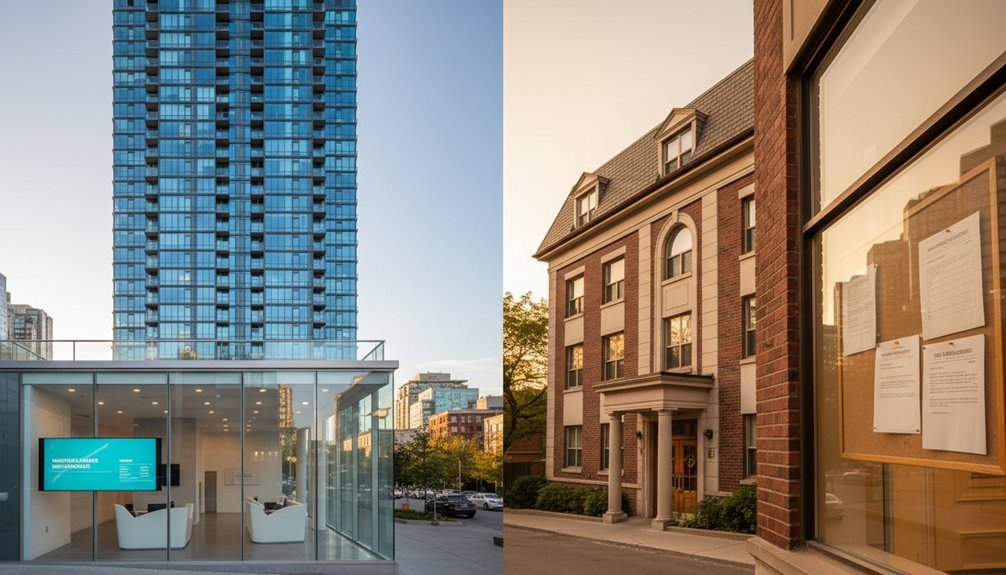
Despite widespread assumptions, 1990s North York condos charge markedly lower monthly fees than modern glass towers. You’ll pay 60-80 cents per square foot in older buildings. Modern towers hit 90 cents to $1.20 for the same coverage.
Older North York condos deliver 60-80 cents per square foot fees while modern glass towers charge up to $1.20 for identical coverage.
Why 90s fees stay lower:
- No luxury amenities drain budgets – Absence of pools and gyms cuts operational expenses by 40%. Modern towers add $0.30-0.50 per square foot just for amenity maintenance.
- Concrete structures need fewer repairs – 1990s builds incur 15-25% lower annual repair costs than glass facades. Balcony maintenance averages $5,000-8,000 per unit per decade versus $10,000 special assessments for cladding failures in newer towers.
- Decades of reserve fund contributions – Older condos avoided the fee spikes plaguing post-2015 buildings, where fees rose 55% amid shrinking unit sizes.
A typical 90s two-bedroom carries $600 monthly fees. Comparable modern three-bedrooms exceed $1,200.
Why 90s Condos Cost Less Per Square Foot Today
1990s North York condos trade at $850 per square foot while new construction demands $1,151—a 35% premium buyers increasingly refuse to pay.
Market Correction Dynamics
You’re witnessing a 21% decline from new condo peaks. Units that commanded $1,689 per square foot in Q3 2022 now ask $1,338. Resale properties undercut further at $813 per square foot across the GTA.
Why Older Units Win on Value
- No New Build Premium: You avoid developer markups on unsold inventory priced at $1,524 per square foot.
- Oversupply Pressure: New listings surged 35% year-over-year while sales dropped 66%, forcing price adjustments downward.
- Cancelled Projects Signal Reality: Birchley Park launched 28% above nearby resale rates and failed—developers overestimated buyer tolerance.
Your Purchasing Power Advantage
Benchmark GTA prices fell 4.6% to $1,068,700. Older condos absorb this correction without the inflated per-square-foot costs baked into modern launches.
Best for Families and Remote Workers: Who Should Buy 90s Condos
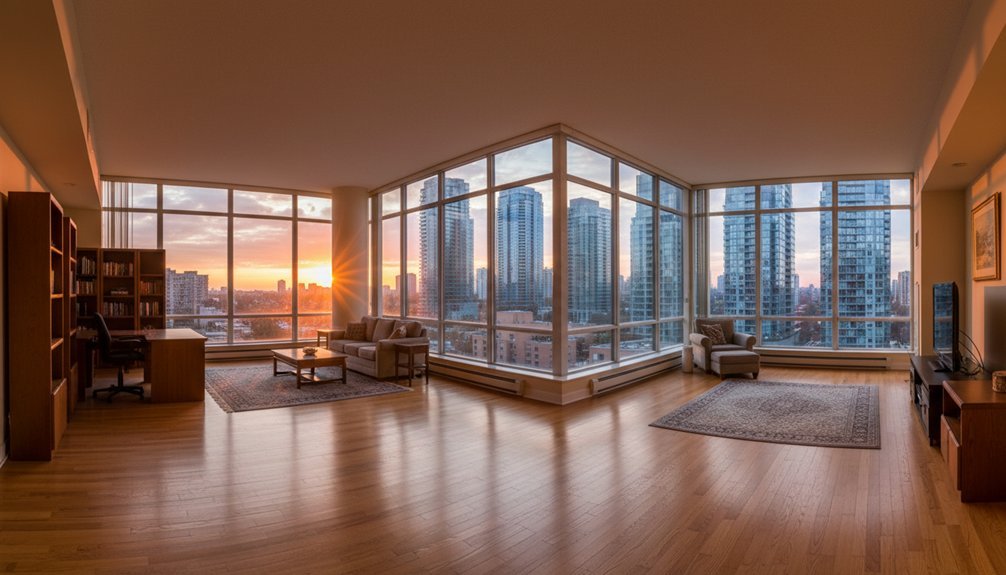
While modern micro-condos shrink to 658 square feet, 90s-era North York units deliver the space families and remote workers actually need.
The numbers tell the story. Buildings from the 1990s allocated 67% of units to two-bedroom or larger configurations. Today’s constructions drop that to just 41%. You’re getting 26% more family-sized inventory from older stock.
Three buyer profiles thrive in 90s condos:
- Multi-child families requiring separate bedrooms without premium pricing—47% of existing GTA condo stock remains two-bedroom units from this era
- Remote professionals needing dedicated home office zones separated from living areas, impossible in sub-700-square-foot modern layouts
- Hybrid households balancing work-from-home schedules with family routines, benefiting from lower-rise buildings (under 12 storeys) that minimize elevator congestion
The practical advantage is spatial. You’ll find ergonomic workstations fit without crowding family zones. Video calls happen in quiet environments. Children occupy distinct spaces while parents work.
Conclusion
90s North York condos deliver 30-50% more square footage for your money. You’re buying concrete construction, 9-foot ceilings, and actual soundproofing—not particle board and hope.
Yes, maintenance fees run higher. You’ll pay $50-100 more monthly than new builds.
But you’re getting 1,000 square feet instead of 600. For families and remote workers needing legitimate space, the math isn’t complicated. Square footage wins.