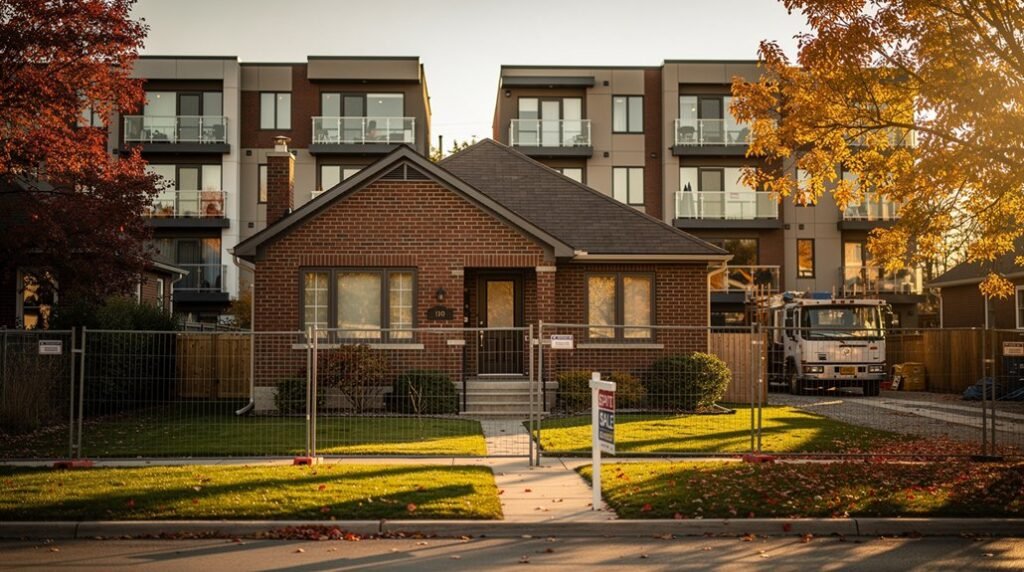

You’ll need to price 3-5% below active listings in your building to generate showings when 42,000+ units complete across the GTA in 2026. Midtown condos face 10-15% additional declines through year-end, with sales-to-new-listings ratios at 28% giving buyers maximum leverage. Target first-time buyers instead of investors by staging strategically and offering flexible closing terms. Spring listings capture returning buyer confidence before mortgage renewals force 1.2 million distressed sellers into competition. The strategies below explain exactly how to position your unit competitively.
Key Takeaways
- Price 3-5% below comparable active listings to appear in buyer searches and stand out in oversupplied market conditions.
- Sell now to exit before forecasted 6-10% additional decline materializes and mortgage renewals force more distressed sellers.
- Family-sized condos in quality buildings hold value better than micro-condos or investor-owned units in high-fee buildings.
- Monitor competing listings weekly and adjust pricing accordingly, especially undercutting similar units within your building.
- Expect 2-3 year flatline in Midtown values with recovery not anticipated until freehold properties rebound first.
Should You Sell Your Yonge-Eglinton Condo Now or Wait for Recovery?
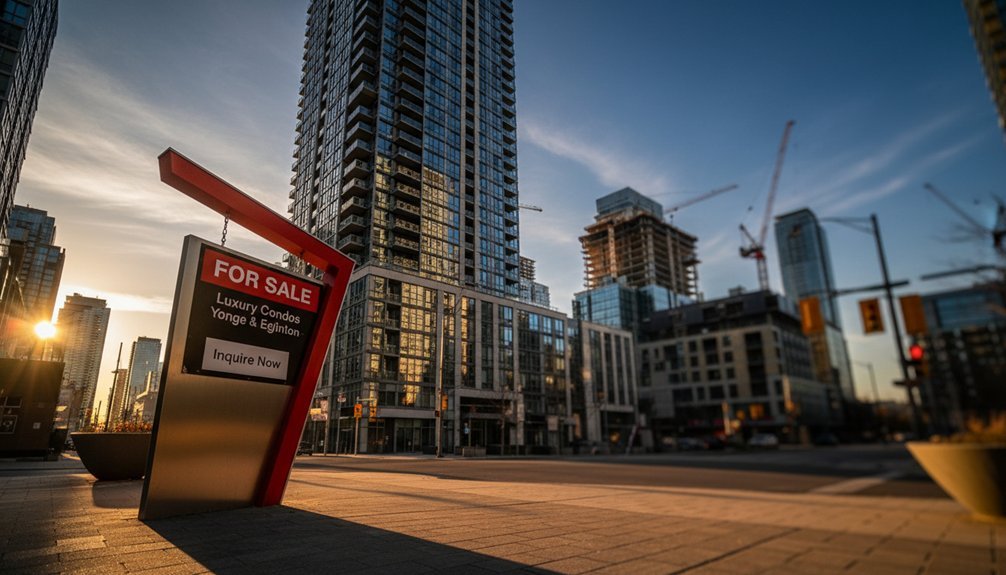
While Yonge-Eglinton remains one of Toronto’s most connected neighborhoods, selling your condo here in 2026 means competing in a market flooded with inventory. Active listings jumped 8% across the GTA, with 42,000+ condo units completing this year.
Current market reality:
- Downtown condo prices could drop 10-15% in oversupplied buildings
- Midtown values will likely flatline for 2-3 years
- Buyers hold leverage due to supply-sales imbalance
Timing factors that matter:
Selling now lets you exit before further declines materialize. Forecasts predict condos face another 6-10% drop by year-end. You’ll compete with fewer distressed sellers than in six months.
Waiting makes sense if you can absorb short-term losses. The area’s population growth to 94,000 by 2031 and Eglinton Crosstown LRT support long-term appreciation. Recovery won’t happen until freehold properties rebound first. Mortgage renewals affecting 1.2 million Canadian mortgages in 2026 could force additional sellers into the market as homeowners face rate increases from 2% to 4%+. Developers are offering increased incentives to compete in the oversaturated market, making resale units harder to position.
Your decision depends on financial flexibility and timeline requirements.
Why Midtown Condos Face Steeper Declines Than Other GTA Areas
Location determines how hard your condo gets hit in this downturn. Midtown faces unique pressures that amplify price declines beyond the GTA average.
Midtown’s condo correction runs deeper than the GTA average—oversupply in your specific unit type drives accelerated losses.
Oversupply concentration hits Yonge-Eglinton hardest:
- Record 25,893 condo units flooded GTA inventory in early 2024
- 1-bedroom + den units dominate Midtown stock
- Your listings linger longer than downtown or suburban equivalents
Price drops exceed regional benchmarks:
- Downtown core condos fell 1.7% in November 2025
- Midtown generic small units weakened faster amid excess inventory
- GTA faces 6-10% declines by end 2026, but Midtown’s small-unit oversupply accelerates losses
- Current prices remain 15-20% below peak levels from Spring 2022
Buyer selectivity compounds the problem:
Micro-condos and generic units take the greatest hit. Investors face mortgage renewal stress at higher rates. Pre-construction demand collapsed 89% versus 2021-24 averages. Condo starts dropped 51% across Ontario in the first nine months of 2025, signaling future supply constraints that won’t help current sellers.
Your Midtown location isn’t less desirable—it’s oversupplied with precisely the unit types buyers currently reject.
What Your Condo Is Really Worth in Today’s Market

From their pandemic peak, condos dropped 21.4% across the GTA. Toronto’s average selling price hit $553,500 in December 2025, down 8.2% annually.
Your unit type determines damage severity:
- Micro-condos face the steepest declines
- Investor-owned units in high-fee buildings see maximum pressure
- Family-sized condos in quality buildings hold better when priced realistically
Experts forecast additional 6-10% drops through 2026 year-end. Location matters—downtown core prices fell only 1.7% as of November 2025, while certain midtown pockets experienced sharper corrections. This quieter environment creates a more negotiated market where pricing adjusts gradually rather than collapsing. The current sales-to-new-listings ratio of 28% confirms buyer leverage in negotiations.
Single-family homes dropped 6.4% year-over-year to $1,174,800, but condos declined faster. Your actual value depends on building quality, unit configuration, and street-by-street positioning within the corridor.
Price Below Comparables to Actually Get Showings
Buyers comparison-shop extensively when inventory is abundant. They’ll skip overpriced listings entirely. Your pricing must account for specific competitive factors:
In a buyer’s market, overpriced listings become invisible—strategic pricing determines whether you compete or sit ignored.
- Price 3-5% below comparable active listings to appear in buyer searches and shortlists immediately
- Undercut similar units in your building that share your layout, floor level, and view orientation
- Monitor new competing listings weekly and adjust if they price below your position
- Factor in finish quality differences when comparing against renovated units or builder inventory
Resale units already hold advantages—averaging $903 per square foot versus $1,212 for developer inventory. You’re competing against patient buyers who’ve replaced panic-buying with calculated negotiation. This abundant choice empowers buyers to negotiate aggressively and removes any sense of urgency from their purchase decisions. With new condo sales down 69% year-over-year, the market has fundamentally shifted in favor of buyers who can afford to wait for the right deal.
Price aggressively or watch your listing stagnate while comparable properties attract all available buyer traffic.
Make Your Micro-Condo Look Bigger With Strategic Staging
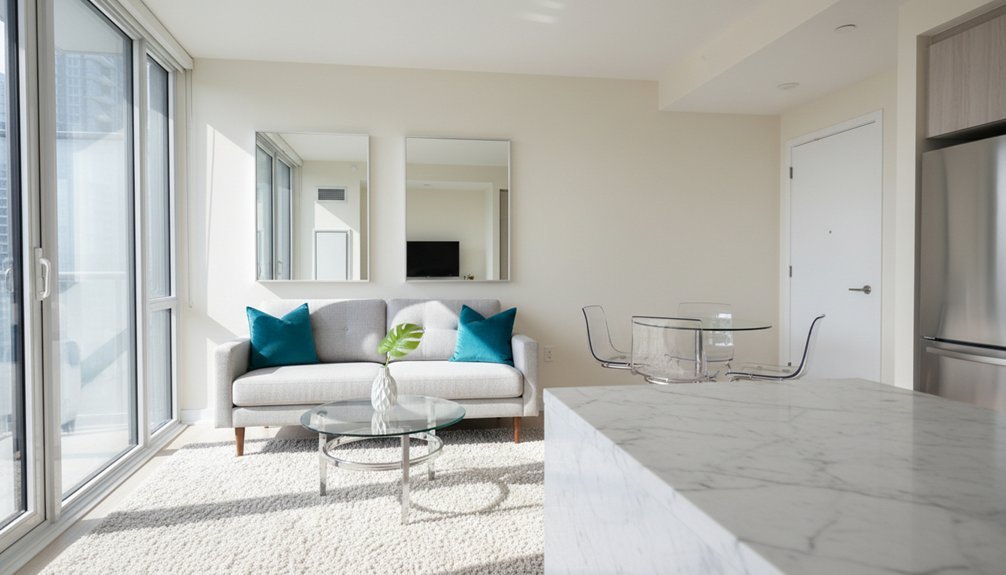
When inventory floods the market, staging becomes your competitive differentiator—not optional decoration.
Remove clutter first. Strip personal belongings that distract from architecture. Keep pathways completely open between adjoining spaces. Organize closets and cabinets to demonstrate full storage capacity.
Define zones without walls. Use area rugs to separate living from dining areas. Add a small desk to showcase work-from-home functionality. Position a bistro table on your balcony.
Optimize light and color. Apply soft, neutral paint throughout. Coordinate lighting temperature with your palette. Brighten critical areas that deserve attention. Balance natural and artificial light to prevent unflattering shadows that shrink rooms.
Scale furniture appropriately. Choose transparent or leggy pieces instead of bulky items. Avoid furniture that divides space visually. Match furnishings to compact dimensions.
Stage outdoor extensions deliberately. Transform balconies into functional dining areas with small tables and chairs. Add plants or lanterns for privacy and charm.
These tactical interventions maximize perceived square footage—your primary selling advantage against competing micro-condos.
Target First-Time Buyers, Not Investors Waiting on the Sidelines
Staging attracts attention, but pricing attracts qualified buyers with financing approval. You’re competing against record-high inventory while investors wait for market bottom. First-time buyers represent your strongest opportunity—25% of millennials plan purchasing in 2026, creating pent-up demand at historic levels. They’re securing pre-approvals for under-$750K properties, and they’re ready to move now.
Position your condo to capture this surge:
- Price competitively below $750K threshold where qualification thresholds and FHSA programs maximize buyer pools
- Emphasize fixed mortgage security appealing to budget-conscious buyers planning long-term stays of 7-10 years
- Highlight proximity to Yonge-Eglinton transit where established neighborhoods outperform downtown micro-condos in value retention
- Leverage Land Transfer Tax rebates and RRSP Home Buyer Plan benefits in marketing materials
Toronto’s 29% sales-to-new-listings ratio confirms firm buyers’ market conditions. First-time purchasers hold negotiation leverage investors lack. Target them aggressively.
List in Spring When Buyer Confidence Starts Returning

Toronto’s condo market hits its seasonal turning point in March-April when traditional spring buyers return with fresh financing approvals. You’ll capitalize on several converging factors:
Rate Environment Shifts
- Bank of Canada easing continues through early 2026
- Mortgage renewals stabilize after 2025’s adjustment period
- New pre-approvals grant access to dormant buyer pools
Market Momentum Indicators
- Overall sales projected at 70,000 units in 2026 versus 60,000 in 2025
- One- and two-bedroom resale activity shows strength despite price moderation
- Spring aligns with gradual inventory absorption patterns
Strategic Timing Advantages
Your listing enters when buyer confidence rebuilds from its 2025 lows. Population growth and steady employment support recovery fundamentals. The shift between falling rates and improving affordability creates opportunity windows.
You’re not waiting for market peaks. You’re positioning during the pivot—when increased inventory meets returning demand. Spring 2026 offers entry before anticipated stabilization drives competition higher.
Offer Flexible Closing Terms Cautious Buyers Want
You’ll close more deals in 2026 by offering extended possession dates and reduced deposit structures that match buyer caution. Flexible closing terms directly address financing uncertainty and economic hesitancy keeping buyers on the sidelines. These two concessions cost you little but considerably expand your pool of qualified, motivated purchasers in a market where inventory outpaces demand.
Extended Possession Date Options
Flexible closing terms eliminate timing friction that stops cautious buyers from committing in saturated markets. You’ll attract more offers by providing extended possession options that accommodate their financial changes.
Extended Possession Strategies That Secure Sales:
- 60-90 Day Possession Windows – Allow buyers time for mortgage approval, rental shifts, or refinancing arrangements without rushing into occupancy immediately after closing.
- Post-Renewal Timing – Accommodate buyers awaiting mortgage renewals by offering possession dates aligned with their existing commitment expiries, typically 3-6 months forward.
- Written Agreement Protection – Require 90 days’ notice for any closing date amendments per Tarion Addendum to preserve buyer warranty rights and prevent compensation disputes.
- Staged Occupancy Options – Permit buyers to close immediately while delaying physical possession, helping them secure financing rates while managing current housing obligations.
Reduced Deposit Requirements
When buyers hesitate in saturated markets, deposit amounts often create the primary barrier to commitment. You’ll strengthen your negotiating position by offering reduced deposit structures that lower initial financial risk.
Standard Market Adjustments:
- Accept 5% initial deposits instead of demanding 10-20% traditional amounts
- Structure staged payments at 60 or 90-day intervals rather than upfront lump sums
- Mirror pre-construction promotional rates to compete with new inventory
Implementation Requirements:
- Confirm trust account holding with your real estate lawyer before advertising reduced terms
- Verify Tarion coverage applies up to $20,000 maximum per unit
- Request buyer pre-approval letters to offset lower deposit security risks
Lower deposit thresholds attract cautious buyers while maintaining legitimate transaction security through proper trust administration.
Conclusion
You’re selling into a tough market—acceptance matters. Your condo won’t command 2022 prices. Price aggressively from day one, stage for maximum perceived space, and target actual buyers rather than speculative investors. Spring 2025 offers your best window before more pre-construction units flood the corridor. You’ll need flexibility on closing dates and realistic expectations on final sale price. Move decisively or risk competing with an even larger inventory next year.