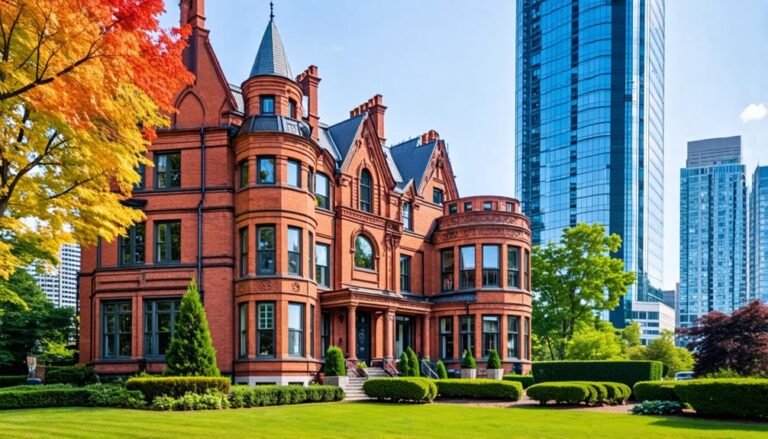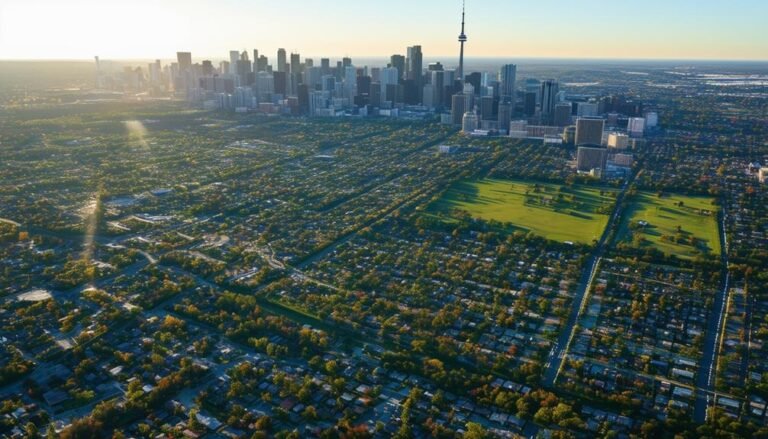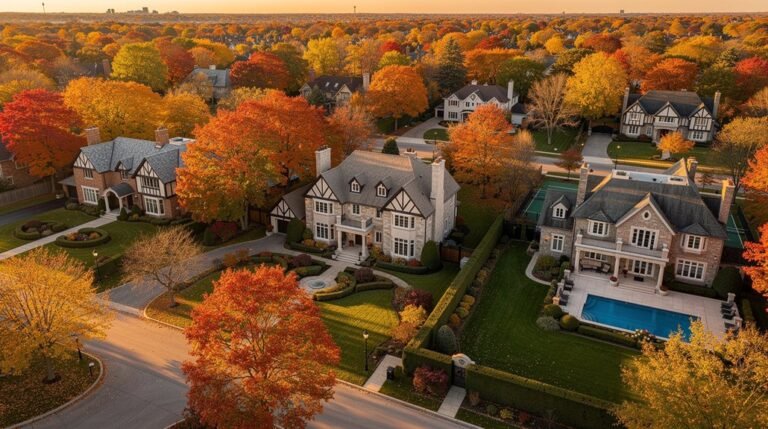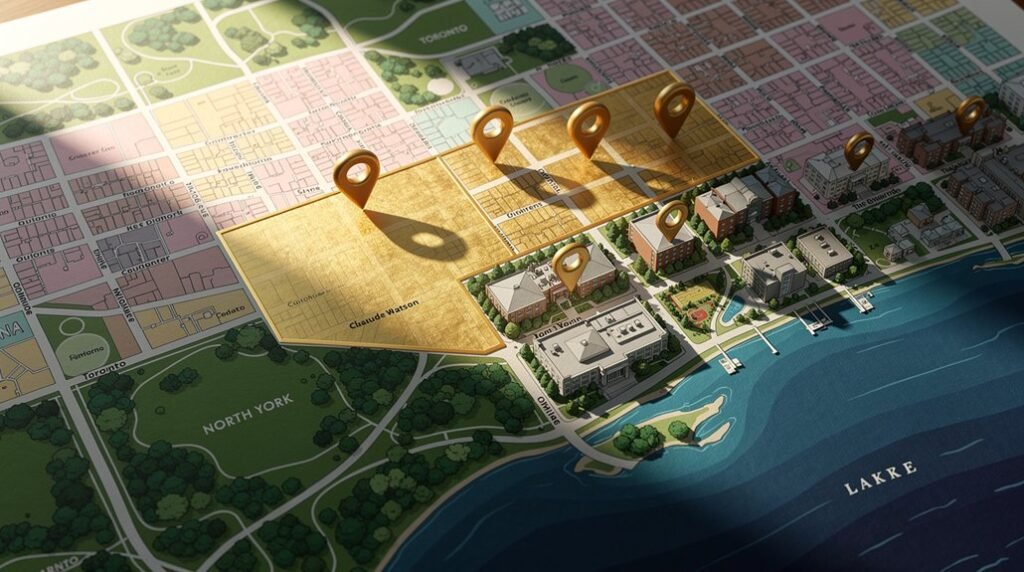
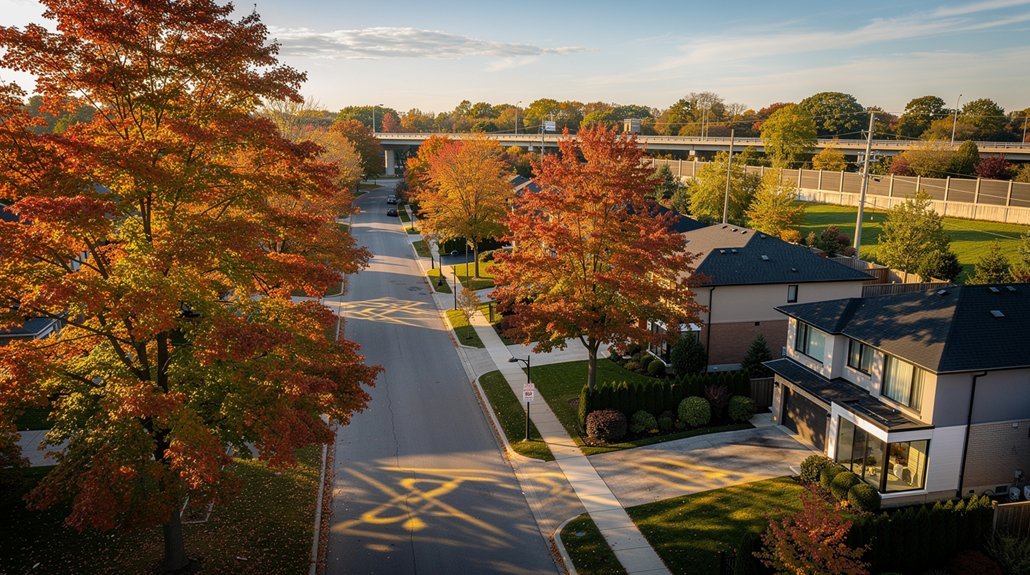
You’ll find the quietest North York streets in Don Mills south of York Mills Road, Willowdale’s residential crescents off Yonge, and Bayview side streets near Sunnybrook Park—all positioned beyond Highway 401’s 500-meter high-noise zone. Avoid Kennedy Road, the Yonge-to-Avenue corridor, and Jane-Finch areas where daytime levels hit 62-74 dBA versus the 55 dBA health threshold. Distance matters more than sound barriers, which show limited effectiveness against consistent highway roar. The sections below break down exact noise patterns, peak traffic times, and required soundproofing specs.
Key Takeaways
- Don Mills area south of York Mills Road and Willowdale crescents off Yonge Street offer quiet residential pockets away from highway noise.
- Bayview side streets near Sunnybrook Park and Bayview Village east of Yonge at Sheppard provide peaceful living environments.
- Kennedy Road, Jane and Finch, and Weston area south of 401 experience the loudest highway noise levels.
- Distance from Highway 401 matters more than sound barriers for reducing noise exposure and health impacts.
- Avoiding major intersection hotspots like Yonge-Avenue corridor and Kennedy Road minimizes both noise and pollution exposure.
North York’s Quietest Streets Near Highway 401
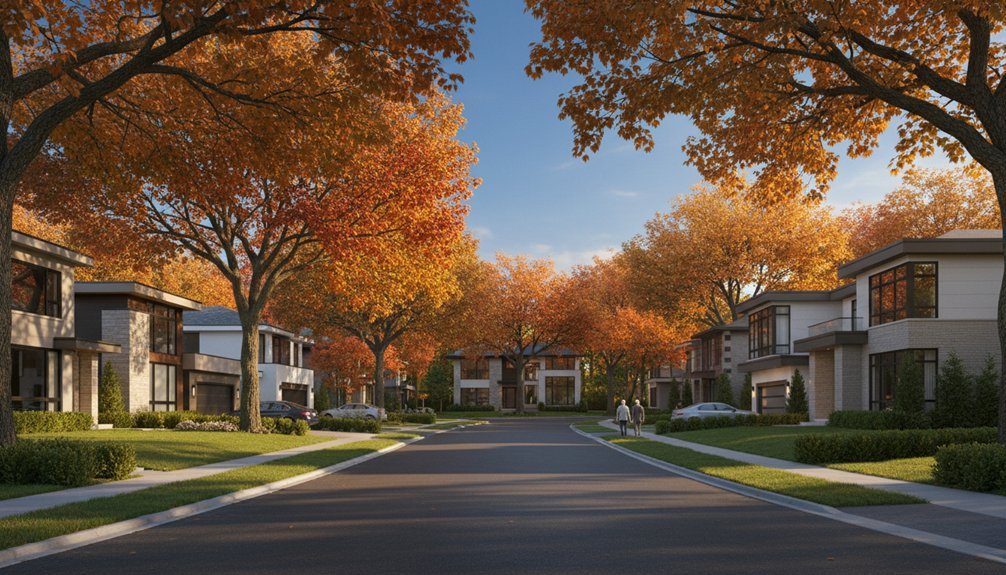
Although Highway 401 cuts through North York as one of North America’s busiest corridors, specific residential pockets maintain surprisingly low noise levels.
Don Mills Area (South of York Mills Road)
Grid layouts feature gentle curves and generous sidewalks. Traffic volumes stay below 200 vehicles per hour during daytime. These residential pockets south of York Mills Road include clearly marked curb space ideal for household parking needs.
Grid layouts feature gentle curves and generous sidewalks with traffic volumes staying below 200 vehicles per hour during daytime.
Willowdale Crescents (Off Yonge Street)
Even pavement and broad curb lanes create peaceful conditions. Dead-end designs prevent through-traffic entirely.
Bayview Side Streets (Around Sunnybrook Park)
Dead-end crescents minimize vehicle movement to residents only. Sunnybrook Park surrounds these streets, creating natural sound buffers.
Don Mills–Finch Neighbourhood
Straight connecting roads and leafy turns near Sunnybrook Park offer quiet living. The park’s presence reduces noise transmission through vegetation and distance. The Finch Hydro Corridor Trail offers a peaceful walking route that further separates residential areas from highway noise.
Bayview Village District (East of Yonge at Sheppard)
Tree-lined streets maintain an elegant, private-enclave atmosphere. East Don Parkland trails form acoustic barriers between residential areas and Highway 401.
Streets to Avoid: North York’s Loudest Highway 401 Zones
While certain North York pockets offer refuge from traffic noise, several corridors experience relentless sound exposure from Highway 401.
North York’s highest-noise zones register 70-80 dBA at first-row houses:
- Kennedy Road near Highway 401 – AADT of 358,500 vehicles combines with 100 km/h speeds and 6% heavy trucks. Receptor R1 records 52 dBA Leq from combined traffic. Daytime peaks reach 74 dBA without barriers.
- Yonge Street to Avenue Road corridor – This 1,700-meter stretch lacks full sound barriers, with 700 meters near Avenue Road completely unprotected. Noise exceedances persist despite partial screening. The barrier stops just before Earl Bales Park, leaving a 500-meter residential area between Yonge and the park exposed to noise and air pollution.
- Jane and Finch neighbourhood – Positioned between Highway 400 and 401, residents face elevated pollution and noise hotspots. Lower-income communities experience disproportionate exposure to traffic-related health impacts.
- Weston area south of 401 – Black Creek Drive intersection creates compounding noise from multiple highway sources. Weekday means hit 64.5 dBA daytime.
Existing barriers reduce sound by only 1-6 dBA at house level.
Sound Barriers and Distance: Why Some Streets Stay Quiet
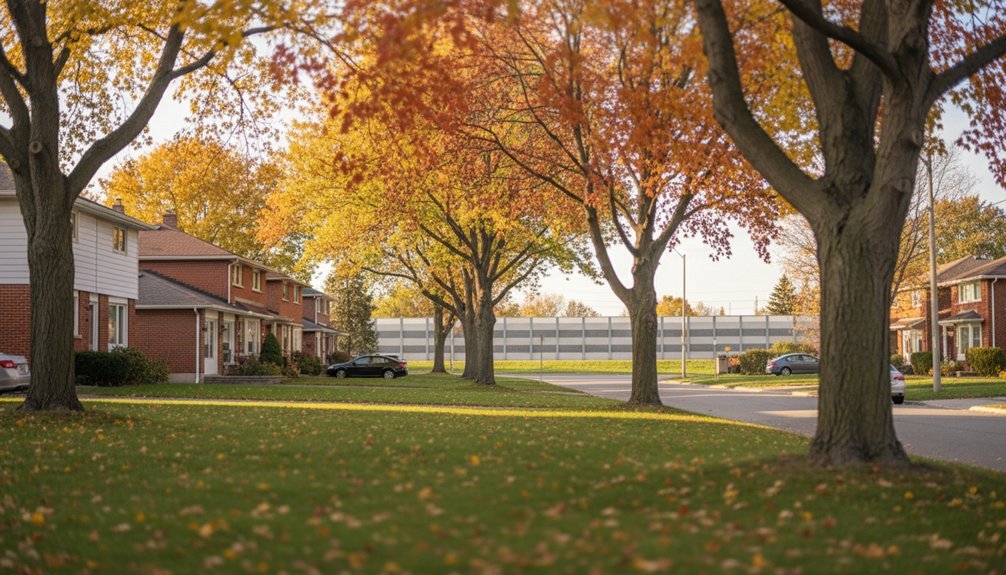
Sound barriers don’t guarantee quiet streets—distance and elevation matter more.
You’ll find barriers along Highway 401 reduce sound by 8-14 dBA directly behind the structure. At the first row of houses, reductions drop to just 1-6 dBA at four feet elevation.
Why barriers have limited effectiveness:
- Sound levels still reach 70-80 dBA at protected homes
- Protection decreases rapidly with distance from barrier
- Parallel barriers can actually increase residential noise on soft ground
- Pre-existing reflective surfaces like neighboring houses limit performance
Ontario’s Ministry installed 5-meter-high barriers along sections of Highway 401. Some feature transparent panels—3,000 square meters used in nearby QEW installations. The SmogStop barrier reaches 6.5 meters with clear acrylic panels. Highway 401 widening projects near Tilbury have deployed barriers over 1 kilometer long to address traffic noise.
Bottom line: Streets beyond the first row receive negligible noise reduction. Your best protection isn’t engineered barriers—it’s simply living farther from the highway.
When Is Highway 401 Loudest in North York?
Highway 401 reaches peak noise levels during weekday mornings and evenings when commuter traffic dominates. You’ll experience the highest sound exposure between 7:00-9:00 AM and 4:00-7:00 PM when vehicle volumes surge.
Loudest Periods Along Highway 401:
- Weekday Rush Hours: Mean daytime levels hit 64.5 dBA, considerably higher than weekend measurements.
- Medium/Heavy Truck Traffic: Trucks comprise 8.0% of total traffic (2.0% medium, 6.0% heavy) traveling at 100 km/h speeds.
- Peak Volume Days: Monday through Friday handle the bulk of 358,500 average annual daily traffic (AADT) near Kennedy Road.
- Daytime Window: Between 7:00 AM and 11:00 PM, noise ranges from 62-74 dBA at proximity locations.
Nighttime periods (11:00 PM-7:00 AM) drop to 56-66 dBA ranges. Weekends offer noticeably quieter conditions with reduced commercial truck traffic and fewer commuters.
From 55 to 74 dBA: How Noise Levels Affect Sleep and Health
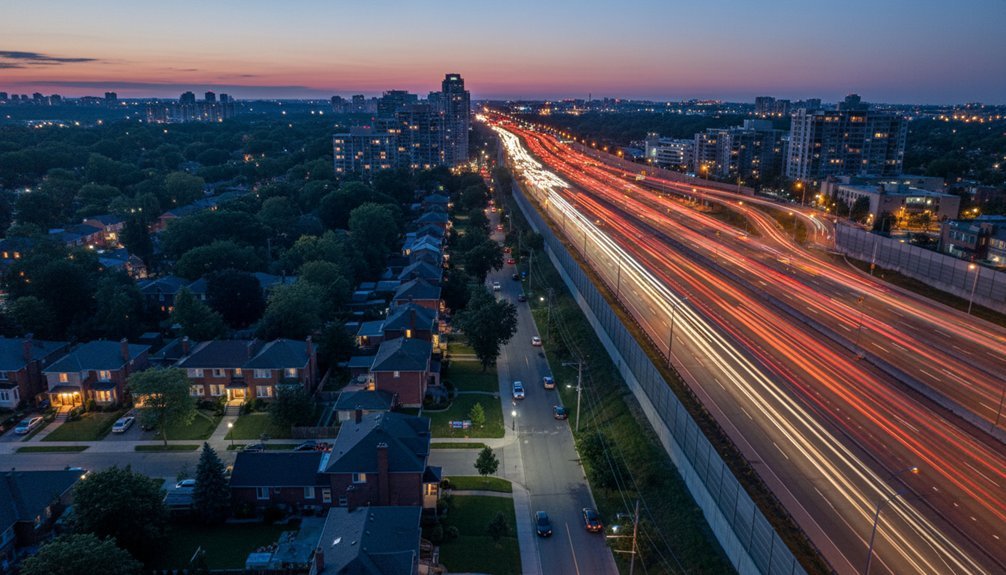
Most North York residents near Highway 401 face constant noise exposure between 56-74 dBA. This range consistently exceeds health guidelines that protect your sleep and cardiovascular system.
Daytime Exposure (62-74 dBA)
- Over 60% of Toronto residents experience road traffic noise above 55 dBA
- WHO’s daytime guideline of 55 dBA is routinely exceeded
- First-row houses near the 401 measure 70-80 dBA at L10 levels
Nighttime Impact (56-66 dBA)
- More than 92% of Toronto residents exceed WHO’s 45 dBA nighttime guideline
- Levels above 55 dBA always surpass sleep disturbance thresholds
- You’ll need closed windows and central AC where levels hit 60-65 dBA
The Sleep Problem
Highway 401’s minimum traffic occurs 04:00-05:00, yet LEQ levels remain elevated throughout the night. Your body can’t achieve restorative sleep when nighttime averages reach 57.5 dBA citywide.
Highway 401 Noise at Intersections and Major Road Crossings
You’ll face the loudest conditions where major roads intersect Highway 401, with daytime levels reaching 74 dBA at highway crossings like Victoria Park Avenue and Kennedy Road. Peak traffic noise occurs from 7:00 to 23:00, dropping to minimum volumes only between 22:00 and 4:00 when most residents need uninterrupted sleep. Highway 401’s six-lane interchanges—carrying 358,500 vehicles daily with nearly 20% truck traffic at 100 km/h—create persistent noise zones extending several hundred meters from each crossing point.
Intersection Hotspots and Pollution
Where North York’s busiest roads collide with Highway 401, noise levels spike dramatically. These intersection hotspots create the harshest acoustic environments you’ll encounter.
The worst offenders generate layered pollution from multiple sources:
- Consumers Road and Victoria Park Avenue: Six-lane configuration plus Highway 401 interchange ramps produce compounded traffic noise exceeding 74 dBA during daytime hours.
- Kennedy Road at Highway 401: Daily traffic volume hits 358,500 vehicles, with 8% trucks generating low-frequency rumble that penetrates buildings.
- Sheppard Avenue East crossings: Vehicular noise dominates, supplemented by industrial HVAC units and Enbridge Gas rooftop cooling towers near Consumers Road.
- Leslie Street interchange: Hospital and GO Station access creates constant traffic flow affecting surrounding residential areas. The Hoggs Hollow bridge structure to the west carries some of North America’s highest traffic volumes, with noise radiating into adjacent neighborhoods. Recent infrastructure improvements included twin tunnel construction beneath the highway corridor using specialized monitoring to minimize traffic disruptions.
All outdoor living spaces at these locations exceed NPC-300’s 60 dBA limit.
Peak Traffic Volume Times
Traffic noise along Highway 401 doesn’t remain constant throughout the day. You’ll experience distinct volume patterns that directly affect sound levels near residential areas.
Morning Peak (7:00-9:00 AM):
- Congestion reaches 43% with 442,900 vehicles daily
- Average speeds drop to 22.3 km/h on major corridors
- Hogg’s Hollow bridges handle 360,300 vehicles across four structures
Evening Peak (4:00-6:00 PM):
- Congestion intensifies to 60%, creating maximum noise exposure
- Speeds decrease further to 18.7 km/h
- Some segments exceed 500,000 vehicles on peak days
Off-Peak Periods:
- Pre-7:00 AM shows markedly reduced traffic flow
- Nighttime hours (10:00 PM-5:00 AM) offer substantial noise relief
- Weekend volumes remain consistently lower than weekday peaks
The Weston-Highway 400 segment represents the world’s busiest freeway corridor. This section surpasses major U.S. highways including Interstate 75 in Atlanta, the Santa Monica Freeway, and Interstate 10 in Houston in terms of traffic volume. Toronto metro area drivers traveled 5.3 billion km in total distance during 2024, contributing to sustained traffic volumes throughout the region.
Distance From Highway Crossings
Distance determines your acoustic fate at these intersections:
- South property lines nearest Highway 401 register 74 dBA daytime—the legal threshold where mitigation becomes mandatory.
- Noise drops 11 dB at receptor R2 positioned farther north (41 dBA vs. 52 dBA at R1), demonstrating exponential decay.
- Victoria Park Avenue’s 36-meter right-of-way concentrates six-lane traffic near the interchange, layering arterial noise atop freeway sound.
- Avenue Road’s 700-meter unprotected stretch lacks sound barriers adjacent to 358,500 AADT on Highway 401.
Every meter northward reduces your exposure substantially.
Soundproofing Requirements for Homes Near Highway 401
If you’re building or renovating near Highway 401, you’ll need upgraded building components that meet specific acoustic performance standards. Central air conditioning becomes mandatory because you can’t rely on open windows for ventilation when traffic noise exceeds 60 dBA at your outdoor living areas. Your windows must feature STC-rated glazing systems, with the exact rating determined by measured noise levels at your property line.
Central Air Conditioning Mandates
When highway noise forces windows shut, Ontario building codes mandate central air conditioning. You can’t rely on natural ventilation when traffic exceeds specific thresholds.
Central air becomes mandatory when:
- Daytime noise hits 65 dBA at your property line
- Nighttime levels reach 60 dBA during sleeping hours
- Windows must stay closed for adequate sound attenuation
- Building envelope sealing prevents cross-ventilation strategies
Highway 401 generates 74 dBA at nearby green spaces. That’s well above trigger points. Your sealed home needs mechanical ventilation to function. Building codes don’t allow developers to construct homes requiring permanent window closure without HVAC systems. It’s considered uninhabitable otherwise.
Warning clauses in your purchase agreement disclose this requirement. You’ll maintain closed windows and operate air conditioning as designed mitigation measures.
STC-Rated Window Upgrades
Highway 401 properties require STC 40 windows minimum. Standard double-pane installations won’t cut it—they max out around STC 37.
Recommended Window Systems:
- Laminated Glass (STC 42+) – Superior sound dampening through bonded layers. Reduces 60-decibel traffic to comfortable indoor levels.
- Triple-Pane Configuration (STC 42-48) – Varying air space thicknesses block highway drone. Performance depends on glass assembly and frame quality.
- Acoustic Casement Windows (STC 57) – Extreme reduction for properties directly adjacent to 401 lanes.
Installation Requirements:
You’ll need proper seals and frame systems. Windows alone won’t work if installation compromises ratings. Toronto traffic noise decreases 70-80% with correct setup.
High-performance windows often outperform walls rated STC 43-48. Full system integration maintains effectiveness against relentless highway noise.
Building Component Performance Standards
Your exterior walls need full-system acoustic design—not just upgraded windows. Building codes near Highway 401 require integrated noise control across multiple components to achieve livable interior sound levels.
Complete building envelope performance standards include:
- Wall assemblies: STC-rated insulation between studs, mass-loaded vinyl barriers, and staggered framing create multi-layer sound absorption
- Roof construction: Densely-packed attic insulation and sealed penetrations prevent overhead noise infiltration
- Door specifications: Solid-core exterior doors with acoustic weatherstripping and automatic bottom sweeps
- HVAC modifications: Sound-attenuating ductwork baffles and strategically-positioned air intake locations away from highway exposure
These components work together as a system. A weak link—like standard doors paired with premium windows—compromises your entire investment. Professional acoustic testing verifies actual performance versus theoretical ratings.
Conclusion
You’ve got the data on North York’s quietest streets and noisiest zones. Distance matters—every 100 meters from the 401 reduces noise by 3-5 dBA. Sound barriers work, dropping levels by 10-15 dBA when properly installed.
Check noise maps before you buy. Visit potential homes during rush hour (7-9 AM, 4-7 PM). Test soundproofing with windows closed. Your sleep quality depends on staying below 55 dBA at night.